Abide In Me
The collaborative Christian
Ministry of
Wes Howard-Brook and Sue Ferguson Johnson
Calendar
Ongoing
The Gospel of Luke: ongoing
Thursday mornings in Issaquah (80 6th Ave SE) 9:30-11:30 a.m.
Yearning for more in-depth Bible study than can be experienced in a limited-length series? Seeking to let God's Word find a home deep in your heart and in your life? Join us for our ongoing, living-room based, small group study of Luke's's gospel. This is a rare opportunity to take our time and move as the Spirit guides rather than as the calendar dictates. Each gathering takes time for coffee and greetings; prayer in silence, in song and in word; and an expansive period in which we listen with our minds, hearts and bodies to each word, phrase and verse of the gospel.
Whether you can only join us once in a while or would like to come every week, consider taking a taste of this special way to be formed together in the Word.
Here's a link to a recording of us offering an overview of context and themes in Luke's Gospel.
Donation only. For more information, call 425-369-8735 or email.
Starting Fall 2016
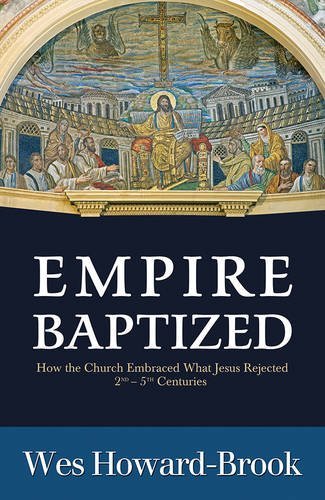
Empire
Baptized:
How the Church Embraced What Jesus Rejected (2nd-5th centuries)
10
a.m. - 3 p.m.
Second Saturdays, October 8, 2016 -
May 13, 2017
at
Abide
in Me
80
6th Ave SE, Issaquah
Have you ever wondered
about how and why
Christianity is
generally so different from the Gospel of Jesus? For instance,
consider:
·
Why
do so many Christians
focus on “saving my
soul,” when Jesus prayed for God’s kingdom to come
“on earth, as it is in
heaven?
·
Why
have so many churches emphasized “right
doctrine,” when Jesus emphasized “right
living”?
·
Why
has Christianity so often gone to war in the
name of God, when Jesus preached and practiced love of enemies?
·
How
did the church become so misogynist, when
Jesus and Paul included women in the discipleship community?
·
Why
have so many churches focused on renouncing
sexuality, when Jesus called for renouncing wealth and privilege?
·
Why is
it so challenging for
churches to care
for nonhuman creation, when Jesus so often encountered God in rivers,
mountains
and desert?
Come join us this year,
as we address these and other
questions in our series, Empire
Baptized:
How “Christianity” Embraced What Jesus Rejected, 2nd-5th
Centuries.
We’ll be engaging
Wes’ new book (publication date: 9/15) as
we explore how a handful of elite writers in the Roman Empire invented
a new
religion, “Christianity,” which they overlaid upon
the
message and life of Jesus.
We will engage the early church writers not for their own sake, but so
that we
can move more faithfully into becoming a community grounded in the
unadulterated
Good News of Jesus.
This Saturday offering is like a series of monthly retreats, with a wide range of people of all ages coming from a variety of religious contexts.
We prepare for each session by sending an email to all participants with reflection questions designed to help you enter the month's texts and follow up each session with an email summary. The presentation portion is recorded and posted online in MP3 format in case you have to miss a session or want to listen again.
Each session follows this rhythm:
9:45: Gathering for coffee and greetings
10:00: opening
prayer
10:30: triads
11:00: EB
presentation
11:20: break
11:35: EB
presentation
12:00: lunch
12:45: What
stayed with
you
1:00: Gospels
and group
prep
1:45: silence
2:05: Small
groups
2:35:
Regathering
2:45: Closing prayer
3:00:
Close
Session
1:Religion of Creation and
Religion of Empire
overview
We will begin
by
introducing the paradigm we’ll be using
this year, taken from “Come Out, My
People!:”
God’s Call Out of Empire
In the Bible and Beyond
(Orbis, 2010): the “religion of creation”
vs. the “religion of empire.” What do we mean by
“religion”? We’ll expand the
usual, restricted sense of this concept to include the worldviews and
practices
that generate a “people” from of a group of
individuals. We’ll see briefly how
this paradigm played out in the Hebrew Scriptures and how Jesus sided
with the
religion of creation in proclaiming his Good News of liberation and
jubilee.
Session 2:
Introducing
Alexandria and North Africa: our
test cases for exploring how “Christianity” came to
be
Many
of us come to our explorations
with an idea of
“universal” Christianity, built up from the
writings of “church fathers” in the
centuries after Jesus. However, the reality is that each early church writer
saw the world from a specific vantage point in terms of geography,
class and
other socioeconomic factors. We’ll introduce the two regions
from which so many
church writers saw the world: the philosophically-trained elite from
two of the
Roman Empire’s most important regions: the Latin-speaking
area of North Africa
and the Greek-speaking area in and around Alexandria, Egypt.
We’ll also explore
how our own geographic and cultural “homes” affect
how we hear texts, both
ancient and contemporary.
Session 3: How
should
Christians read the Bible: the “rule
of faith” and the influence of Platonism
Early
Christian writers insisted that
the Scriptures of
Israel were to be part of the eventual “Bible” for
Christians. However, they
could see as easily as we can the many contradictions found within the
collection
of texts. The “religion of creation vs. religion of
empire” paradigm is one way
to interpret this conflict. However, early church writers, under the
influence
of Roman and Greek cultural presuppositions, resolved this problem very
differently. We’ll explore how Ireneaus, Justin Martyr, and
Origen of Alexandria
(later, Caesarea), established the way to read Scripture that has
shaped
Western history and society. The result has been disastrous for
Christianity’s
engagement with social justice.
Session 4:
Alexandria,
150-22 CE:
Clement and Origen
Themes: economics and the earth
We’ll
build on the
foundation we’ve established so far by
exploring how specific writers engaged the cultures of their times and
places
around specific themes. This session, we’ll work with two
writers who epitomize
the Alexandrian milieu of the second and early third centuries, Clement
and
Origen. We’ll look at how their Platonic presuppositions and
personal social
location among the philosophical elite shaped their attitudes about
“Christian”
economic practice. We’ll also look at how their assumptions
about what it is to
be “human” pushed them away from reverence for or
concern with the fate of nonhuman
creation. We’ll contrast their views with those found in the
New Testament on
these central themes.
Session 5:
North Africa,
150-250 CE:
Tertullian and Cyprian
Themes: places of sacred encounter; engagement with “the
other”
Now
we turn to a very different
place: North Africa in and
around the city of Carthage. The period we’ll explore this
month began and
ended with martyrdom, as Christians,
voluntarily and otherwise, put their lives on the line for the
“crime” of
claiming to be “Christian.” We’ll look
at how the polemical writer Tertullian and the bishop Cyprian each
embodied
Roman assumptions about power and authority in this challenging milieu
and
moment. We’ll see how Tertullian sought to draw sharp lines
between “Christians”
and others, while Cyprian sought to establish the person and office of
the
bishop as the basis for church authority. Again, we’ll see
how these views
contrasted with the Gospel of Jesus and the message of Paul.
Session 6: Eusebius
and Constantine: Celebrating the first “Christian”
emperor
Themes: Narrative and counternarrative
It’s
easy to understand why
the bishop, Eusebius, wanted to celebrate
Constantine’s embrace of the Christian god. He had seen his
fellow bishops
hideously tortured to death for being “Christian,”
and now, Constantine had
ended the persecution. For many centuries, however, both Eusebius’
narrative of Church
History
and Constantine’s “conversion” have been
taken at face value as descriptions of
events. We’ll explore how both the life of Constantine and Eusebius’
church narrative were
rhetorical constructs designed to legitimize a particular set of church
institutions and practices embedded within empire. We’ll
contrast this with
Jesus’ vision of the “reign of God” in
parable and story.
Session 7:
Athanasius and
the desert fathers: establishing
institutional Christianity
Themes: Creeds and renunciation of the body
With
Christianity firmly established
as the emperor’s (if
not the empire’s) religion, we see two opposing movements
that clashed in Egypt
in the fourth century. On the one hand, we have the
“monastic” movement, in
which people turned to the desert in rejection of the indulgent luxury
of
imperial life for the elite. On the other, we’ll meet one of
the most powerful
bishops in church history, the cantankerous urban
“boss,” Athanasius, who
sought mightily to rein the desert dwellers into subservience to urban
church
structures. We’ll engage the dynamics of the countless
creedal councils at
which bishops from around the empire gathered to work out
“right words” with
which to express “catholic” Christianity.
We’ll also look at the ambiguous
legacy of the monastic communities and their renunciation of both
wealth and
sexuality.
Session 8:
Jerome,
Ambrose, and Augustine:
setting
the themes of Catholic
Christianity for the next millennium
Themes: misogyny/virginity and “just war”
We’ll
conclude with an
overview of three official “saints”
from the late fourth and earth fifth centuries: the monk/writer Jerome;
the
powerful bishop of Milan, Ambrose; and the perhaps most prolific
Christian
writer of all time, Augustine of Hippo. We’ll see how these
very different
personalities each generated a legacy that became
“sanctified” at the heart of
Christian “tradition,” as we engage attitudes
toward women and sexuality in
Jerome’s life and work, and questions of power, violence and
war in the work of
Ambrose and Augustine.
Fee:$200
suggested for the entire series.
However, no one is ever
turned away for lack of money!
You are welcome to pay
in installments of whatever
amount works best for you. You can pay by
check (made out to "Wes Howard-Brook" or "Sue Ferguson Johnson") or by
PayPal via the button at the bottom of this page.
Questions? Please email us.